
Indoor vs Outdoor LED Screens: Key Differences Explained
What makes an outdoor LED screen different from an indoor one? This guide covers brightness, IP ratings, pixel pitch, power, weatherproofing, and how to choose the right type for your application.
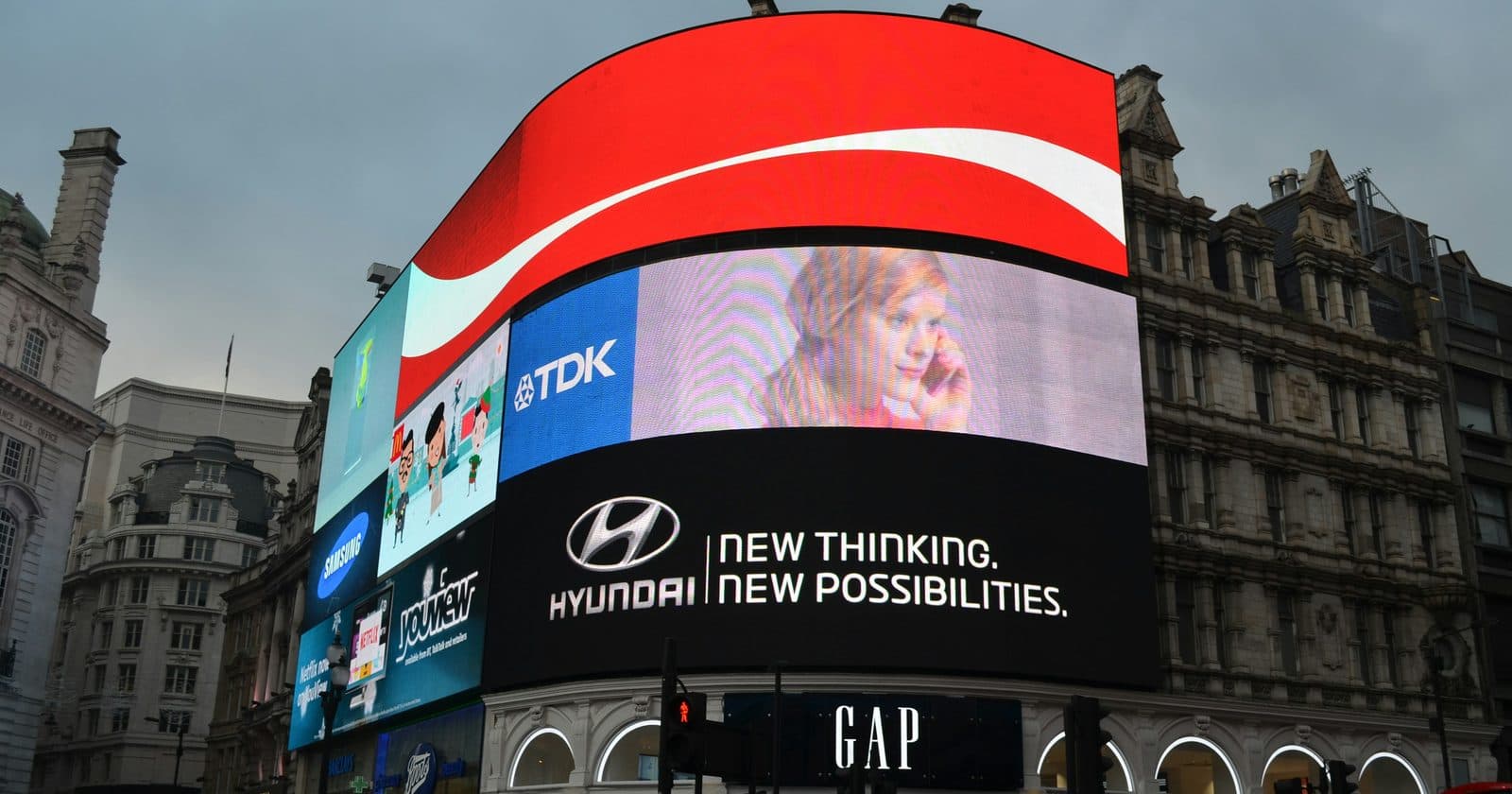
Walk past any high street and you'll see LED screens of wildly different types: a crisp fine-pitch display in a shop window, a massive pixel grid above a stadium, a bright billboard on the motorway. They're all LED screens, but they're built completely differently. Understanding what separates indoor and outdoor LED screens stops you buying the wrong product and helps you specify correctly for every project.
The Core Difference: Brightness
The single most important difference between indoor and outdoor LED screens is brightness, measured in nits (candelas per square metre, cd/m²). Brightness determines whether the screen content is visible in the ambient light conditions where it will be used.
| Screen Type | Typical Brightness | Why |
|---|---|---|
| Indoor LED screen | 800–2,000 nits | Controlled lighting; no direct sunlight competition |
| Semi-outdoor LED screen | 2,500–4,000 nits | Covered but exposed: shopping centre entrances, canopied stages |
| Outdoor LED screen | 5,000–10,000 nits | Must compete with direct sunlight (approx. 100,000 lux) |
An indoor LED screen placed outdoors in direct sunlight would appear completely washed out; the ambient light overwhelms its maximum output. Conversely, an outdoor screen used indoors is not just wasteful (it consumes far more power to produce brightness you don't need); it can be genuinely uncomfortable for viewers at close range.
IP Ratings: What They Mean for LED Screens
IP (Ingress Protection) rating is a two-digit code that describes a device's protection against solid particles (first digit) and liquids (second digit). For LED screens, the IP rating tells you whether the cabinet can survive outdoor conditions.
| IP Rating | Protection Level | Typical Use |
|---|---|---|
| IP20 | No dust or water protection | Indoor only: clean, dry environments |
| IP30 | Protection against large solid objects | Indoor: slight improvement but still not weatherproof |
| IP43 | Protected against spraying water at up to 60° from vertical | Indoor/semi-outdoor in sheltered positions |
| IP54 | Dust protected, splash proof from all directions | Semi-outdoor: sheltered stages, covered entrances |
| IP65 | Dust tight, protected against low-pressure water jets | Outdoor: standard for most outdoor LED screens |
| IP67 | Dust tight, protected against temporary immersion | Harsh outdoor, coastal or festival environments |
| IP68 | Dust tight, protected against continuous immersion | Specialist applications: underwater, flooding risk |
For outdoor applications, IP65 is the minimum acceptable rating; it means the cabinet can withstand rain from any direction. IP67 is recommended for festival, coastal, or high-humidity environments where condensation and heavy rain are likely.
Pixel Pitch Differences: Indoor vs Outdoor
Outdoor screens typically use coarser pixel pitches than indoor screens. The reasons are practical:
- Outdoor audiences are almost always further away: a billboard is seen from 30–100 metres, not 3 metres
- Coarser pitch means larger, more robust pixels that are easier to weatherproof and cheaper to repair
- Higher per-pixel brightness is easier to achieve with larger pixels; smaller pixels struggle to hit the nit levels needed for outdoor use
- At outdoor viewing distances, fine pitch provides no perceptible benefit
| Application | Typical Pixel Pitch | Typical Viewing Distance |
|---|---|---|
| Indoor conference, broadcast | P1.5–P2.5 | 2–10 m |
| Indoor events, concerts | P3–P4 | 5–30 m |
| Semi-outdoor events, festivals | P3.9–P5 | 8–40 m |
| Outdoor stage screen | P5–P8 | 15–60 m |
| Outdoor billboard / roadside | P8–P16 | 30–200 m |
| Stadium perimeter / scoreboard | P10–P20 | 50–300 m |
Power Consumption: Outdoor Screens Use More
Outdoor LED screens consume significantly more power than indoor equivalents of the same physical size. The extra brightness required for outdoor visibility demands more power per pixel, and the higher brightness is sustained for longer hours (many outdoor screens run 16–24 hours a day).
A typical P6 outdoor cabinet at 1m² might draw 600–900W at full brightness. The equivalent indoor P4 cabinet at 1m² might draw 150–250W at its rated brightness. This has major implications for power distribution planning and running costs.
Cabinet Construction Differences
Beyond electronics, the physical construction of indoor and outdoor LED cabinets is fundamentally different:
| Feature | Indoor Cabinet | Outdoor Cabinet |
|---|---|---|
| Front face material | Open mesh or light diffuser: not weatherproof | Sealed with clear resin coating over LEDs, IP65+ |
| Rear cover | Ventilated: relies on indoor airflow | Sealed with internal fans and sealed vents with filters |
| Cooling | Natural convection or small internal fans | Active forced cooling, sometimes with external fins |
| LED type | SMD or COB: optimised for fine pitch | Outdoor-rated SMD: larger, higher current capacity |
| Weight | Lighter: around 8–15 kg/m² | Heavier: around 20–40 kg/m² due to reinforced housing |
| Connector weatherproofing | Standard RJ45 and power connectors | IP-rated waterproof connectors throughout |
Semi-Outdoor Screens: The Middle Ground
Semi-outdoor (or "window-facing") screens occupy a growing middle ground, typically used in retail window displays, covered stages, indoor venues with large openings, or areas with indirect natural light. They offer:
- Brightness of 2,500–5,000 nits: visible in indirect daylight but not direct sun
- IP43–IP54 rating: splash-proof but not submersion-resistant
- Finer pixel pitch than outdoor screens: 3mm to 5mm is common
- Lower power consumption than full outdoor
- Lighter construction than outdoor, closer to indoor weight
Semi-outdoor screens are ideal for covered festival stages, shopping centre atriums, sports facilities with roof but no walls, and any location where the screen is protected from direct rain but exposed to ambient daylight.
Quick Decision Guide
| Your Application | Screen Type to Use |
|---|---|
| Indoor conference room, boardroom, control room | Indoor: P2 to P3 |
| Indoor concert venue, club, theatre | Indoor: P3 to P4 |
| Covered outdoor stage (festival, sports) | Semi-outdoor: P3.9 to P5 |
| Shopping centre atrium or window display | Semi-outdoor: P3 to P4 |
| Outdoor festival main stage | Outdoor IP65: P5 to P8 |
| Outdoor roadside billboard | Outdoor IP65/67: P8 to P16 |
| Stadium perimeter | Outdoor IP65: P10 to P16 |
Get the Complete LED Screen Specification Guide
Chapter 1 and 4 of the full guide cover LED screen types in depth, with specification tables, site survey templates, and worked examples for matching the right screen to any venue.
Get the Full Guide for £35 →